

Mastering the Market: A Comprehensive Guide on Trading Crypto Indicators
In the ever-evolving landscape of cryptocurrency, traders are constantly searching for reliable methods to navigate the volatile markets. One of the most effective ways to achieve this is through the use of trading crypto indicators. These mathematical calculations based on price, volume, or open interest, assist traders in understanding market trends and potential price movements. If you’re looking to revolutionize your trading strategy, Trading Crypto Indicators visit website to learn more about these indispensable tools.
What are Trading Crypto Indicators?
Trading indicators are statistical measures that help traders analyze price trends, volatility, and overall market direction. They can be broadly categorized into two types: leading indicators and lagging indicators. Leading indicators predict future price movements based on past data, while lagging indicators confirm trends that have already occurred. Both types play a pivotal role in making informed trading decisions.
Important Trading Crypto Indicators
Here are several widely used trading crypto indicators that can assist traders in developing robust strategies:
1. Moving Averages
Moving averages (MA) smooth out price action and help identify the direction of the trend. The two common types are Simple Moving Average (SMA) and Exponential Moving Average (EMA). Traders frequently use the 50-period and 200-period moving averages to identify bullish or bearish trends:
- SMA: A type of average that gives equal weight to all prices in the selected period. Useful for identifying longer-term trends.
- EMA: A variant that gives more weight to recent prices, making it more responsive to new information. Often preferred by short-term traders.
2. Relative Strength Index (RSI)
The RSI is a momentum oscillator that measures the speed and change of price movements. It ranges from 0 to 100, typically used to identify overbought or oversold conditions. An RSI above 70 implies that the asset may be overbought, while an RSI below 30 suggests it may be oversold. This can help traders identify potential reversal points in the market.
3. Bollinger Bands
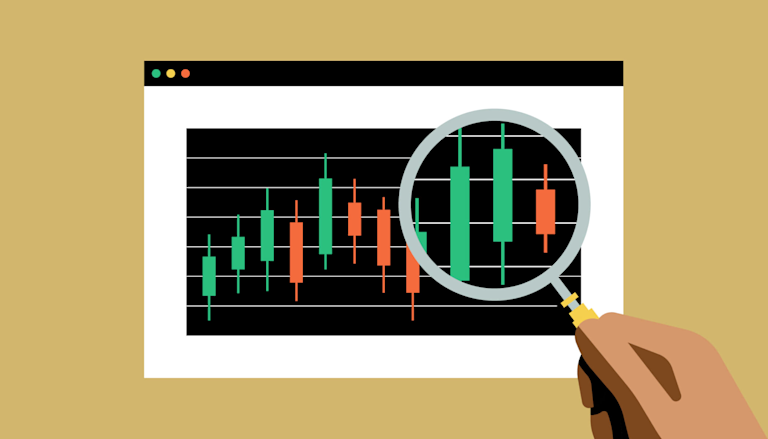
Bollinger Bands consist of a middle line (SMA) and two outer bands that are standard deviations away from the SMA. They are used to measure market volatility and identify potential price breakouts. When the bands contract, it indicates low volatility, while expansion suggests increasing volatility. Traders often look for price movements outside the bands as signals to enter or exit trades.
4. MACD (Moving Average Convergence Divergence)
The MACD is a trend-following momentum indicator that shows the relationship between two moving averages of an asset’s price. The MACD is calculated by subtracting the 26-period EMA from the 12-period EMA. Traders often look for the MACD line crossing above or below the signal line as potential buy or sell signals.
5. Fibonacci Retracement
Fibonacci retracement levels are horizontal lines that indicate potential support and resistance levels based on the Fibonacci sequence. These levels are drawn by taking the high and low of a price movement and dividing the vertical distance by the key Fibonacci ratios: 23.6%, 38.2%, 50%, 61.8%, and 100%. Traders often watch these levels for price reversals.
How to Use Trading Indicators Wisely
While trading indicators can provide valuable insights, they are not foolproof. Here are some tips for using indicators effectively:
- Combine Indicators: Relying on one indicator can be misleading. Using a combination of indicators can provide more reliable signals.
- Understand Market Conditions: Different indicators work better in certain market conditions. For example, trend indicators may perform poorly in sideways markets.
- Practice Risk Management: Always incorporate risk management techniques when trading—never risk more than you can afford to lose.
The Role of Emotion in Trading
Beyond technical analysis with indicators, it’s important to recognize the role of emotions in trading. Many traders make decisions driven by fear or greed, which can lead to costly mistakes. Maintaining discipline and following a well-defined trading strategy is crucial for long-term success in the cryptocurrency realm.
Final Thoughts
Trading crypto indicators are invaluable tools that can enhance trading strategies and empower traders to make informed decisions. Understanding how to utilize these indicators effectively can elevate your trading experience and increase your chances of success. Always remember to stay updated on market developments and continuously analyze and adjust your strategies as necessary. With the right combination of knowledge and tools, you’ll be better equipped to navigate the intricacies of the cryptocurrency market.